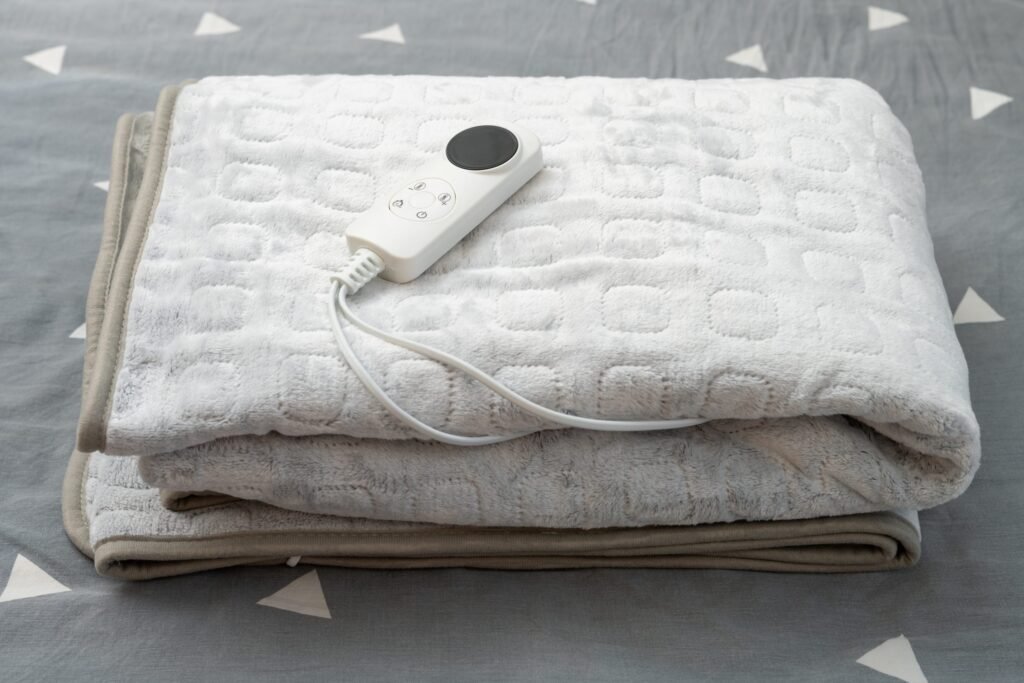
If you’re thinking about using an electric blanket this winter, you’ve probably wondered whether it will noticeably increase your electricity bill.
The short answer: no — and the numbers back it up.
According to the U.S. Department of Energy, electric blankets and mattress pads are among the most efficient ways to stay warm, precisely because they heat a small, enclosed space (you, under the covers) instead of an entire room. That’s the whole reason they’re so cheap to run.
How Much Electricity Does an Electric Blanket Use?
Most electric blankets draw between 50 and 150 watts, depending on:
- Blanket size (twin vs. king)
- Heat setting (low/medium/high)
- Brand and model — for example, a Sunbeam queen-size blanket typically sits around 70–100W on medium, while larger dual-control king blankets can run closer to 130–150W per side (see our 2026 heated blanket buying guide for a full model-by-model breakdown)
- Whether it’s a heated throw or a full-size blanket
Most people don’t run their blanket on high all night — medium is the most common setting, and actual draw is often lower than the blanket’s maximum rating.
Appliance Power Usage Comparison
| Appliance | Typical Power Usage |
|---|---|
| Heated Throw | 40–100 W |
| Electric Blanket | 50–150 W |
| Heating Blanket (full-size, high) | Up to ~150 W |
| Space Heater | 1,200–1,500 W |
| Central Heating (forced air) | Several thousand W (cycling) |
How Much Does It Cost to Run an Electric Blanket?
Here’s a simple example using a 100W blanket — a common mid-range wattage.
- Running it 8 hours: 100W × 8 hours ÷ 1000 = 0.8 kWh
- At a U.S. average rate of about $0.17/kWh, that’s roughly $0.14 per night
- Used nightly for a month: around $4–5
If your blanket runs closer to 150W, or your local rate is higher, expect the monthly cost to land closer to $6–8 — still far below what most space heaters cost to run for the same hours.
Do Heated Blankets Use a Lot of Electricity?
No. “Heated blanket” and “electric blanket” refer to essentially the same product, and they fall within the same wattage range — roughly 40–150W depending on size and setting.
Because a heated blanket warms your body directly instead of the surrounding air, it’s inherently more efficient than heating an entire bedroom just so one person stays warm.
Do Heating Blankets Use a Lot of Electricity?
Also no. “Heating blanket” is just another common name for the same product category, and the power draw is identical: typically 50–150W depending on the model and heat setting. Whichever term you search for, the underlying technology — and the low electricity cost — is the same.
Do Electric Blankets Use a Lot of Energy?
In terms of overall energy consumption (not just instantaneous wattage), electric blankets are considered low-energy appliances. Running one for 8 hours uses less energy than running a single 100W light bulb continuously for the same period — and far less than a space heater, hair dryer, or electric kettle used even briefly.
If you’re tracking total household energy use, an electric blanket is unlikely to make a noticeable difference on your bill.
Electric Blanket vs. Space Heater
If your goal is just staying warm while you sleep, an electric blanket is almost always the cheaper option.
- Space heater: ~1,200–1,500W
- Electric blanket: ~100W
That’s roughly 10–15x more electricity used by a space heater over the same period, though the exact gap depends on your specific heater and blanket settings.
Tips to Reduce Electricity Use Even Further
- Preheat, then lower the setting. Warm the bed on high for 10–15 minutes before you get in, then switch to low or medium.
- Use the built-in timer if your blanket has one, so it shuts off automatically once you’re asleep.
- Avoid folding or bunching the blanket — creased heating wires can work harder (and wear out faster) to maintain even heat.
- Layer with regular bedding so you can run the blanket on a lower setting and still stay warm.
- Replace blankets with uneven heating. Older blankets with worn heating elements often need higher settings to feel the same warmth, which quietly increases usage.
Does an Electric Blanket Save Money?
For most households, yes — if you’re using it to avoid cranking up the thermostat or running a space heater just to stay warm at night. Heating one person under a blanket is inherently cheaper than heating an entire room or house.
Frequently Asked Questions
Will an electric blanket use a lot of electricity? No. Most use 50–150 watts, making them one of the more efficient options for personal warmth.
Do heated blankets use a lot of electricity? No — heated blankets use the same wattage range as electric blankets and cost only a few dollars a month to run nightly.
Do heating blankets use a lot of electricity? No. “Heating blanket” is another name for the same product, with the same low power draw of roughly 50–150W.
Do electric blankets use a lot of energy overnight? Not usually. Even over a full 8-hour night, total energy use remains low compared to room-heating appliances.
Are electric blankets cheaper to run than space heaters? Yes, in almost all cases. Since they heat you directly rather than the air around you, they use a fraction of the electricity.
Ready to buy one? Check out our 2026 heated blanket buying guide for a breakdown of the top-rated models, including options for couples, safety-focused sensors for kids and elderly users, and picks for extreme cold climates.
Final Thoughts
If your main concern is your electricity bill, an electric blanket is unlikely to move the needle much. The exact running cost depends on your specific model, heat setting, and local electricity rate — but across the board, electric, heated, and heating blankets all fall into the same low-wattage, low-cost category.
For anyone looking for a comfortable and energy-conscious way to stay warm during colder months, an electric blanket remains one of the most cost-effective heating options available.