Ever scooped out your protein powder and wondered if you’re actually getting the amount listed on the label? You’re not alone. Scoop sizes aren’t standardized across brands, which means “one scoop” can mean very different things depending on what tub is sitting in your kitchen.
Here’s the quick answer: a standard protein powder scoop is about 30 grams (roughly 1 ounce), but it can range anywhere from 25g to 45g depending on the brand and protein type.
Quick Reference: Scoop Size Conversions
| Measurement | Approximate Amount |
|---|---|
| 1 scoop (standard) | 28–32 grams |
| 1 scoop | ~1 ounce |
| 1 scoop | ~2 tablespoons |
| 1 scoop (mass gainer) | 40–45 grams |
| 1 scoop (plant-based) | 30–35 grams |
Why Scoop Size Varies by Brand
Protein powder isn’t a single uniform product, so it makes sense that scoop sizes differ:
- Whey protein isolate tends to be lighter and finer, so a scoop often lands around 28–30g.
- Plant-based proteins (pea, rice, hemp) are denser and can weigh more per scoop — often 30–35g.
- Mass gainers use bigger scoops (sometimes 40–45g) because they’re formulated to pack in more calories per serving.
- Casein protein is thicker and slightly heavier by volume compared to whey.
For example, a brand like Optimum Nutrition typically uses a ~30g scoop, while some plant-based brands like Garden of Life may use scoops closer to 33–38g. The scoop that comes in the tub is calibrated specifically for that product’s density — so don’t assume scoops are interchangeable between brands.
How to Measure Without a Scale
If you don’t have a kitchen scale handy, here are reliable approximations:
- 1 scoop ≈ 2 tablespoons (for most whey powders)
- 1 scoop ≈ ¼ cup (loosely packed, for lighter powders)
- 1 scoop ≈ 1 oz by volume (though weight can vary slightly)
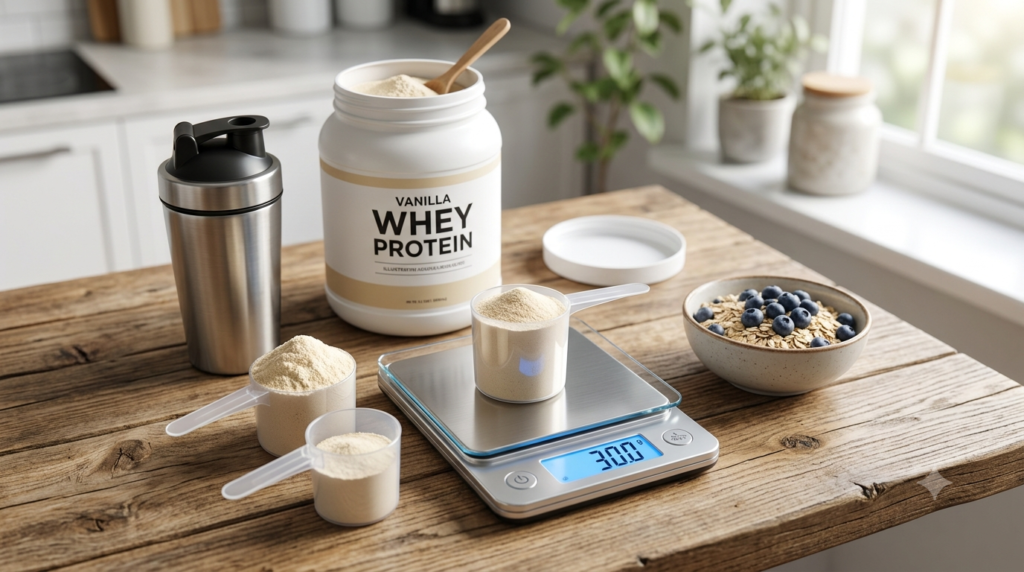
For the most accurate results, a digital kitchen scale is still your best bet — protein powder density varies enough that volume-based measuring (cups, tablespoons) can be off by a few grams either way.
What Happens If You Use Too Much or Too Little
Getting your scoop size wrong isn’t just a minor inconvenience — it can throw off your nutrition tracking:
- Too little powder means less protein than you think you’re consuming, which can affect muscle recovery and daily protein goals.
- Too much powder adds extra calories and protein you didn’t account for, which matters if you’re tracking macros closely for weight loss or muscle gain.
- Inconsistent scooping (heaping vs. level scoops) can create day-to-day variance of 5–10g, enough to skew weekly averages if you’re being precise.
If you’re serious about hitting exact protein targets, weighing your powder on a scale — even just occasionally to calibrate your scoop — is the most reliable method.
FAQ
Is a scoop always 30 grams? No. While 30g is a common average, scoops range from 25g to 45g depending on the brand and protein type. Always check the nutrition label for your specific product.
How many grams of protein are in one scoop? This depends on the product’s protein concentration, not just scoop size. A 30g scoop might contain anywhere from 20g to 25g of actual protein, since the rest is made up of flavoring, thickeners, and other ingredients.
Can I use a kitchen scale instead of the scoop? Yes, and it’s actually more accurate. Weighing your powder eliminates the guesswork that comes with packing powder loosely or tightly into a scoop.
Does scoop size affect calorie count? Yes. A heaping scoop versus a level scoop can add an extra 5–10 calories per serving, which adds up if you’re tracking intake closely over time.
Final Thoughts
Scoop sizes aren’t one-size-fits-all, so the safest approach is to check your specific product’s label rather than assuming every scoop equals the same amount. If precision matters for your goals whether that’s muscle building, weight loss, or general macro tracking investing in a cheap kitchen scale is the easiest way to remove the guesswork entirely.